Sales call statistics: 7 rules checked against the data
Seven sales-call rules, from talk ratio to silent buyers, checked against Gong Labs data and two peer-reviewed studies. Guess each number, then see the source.
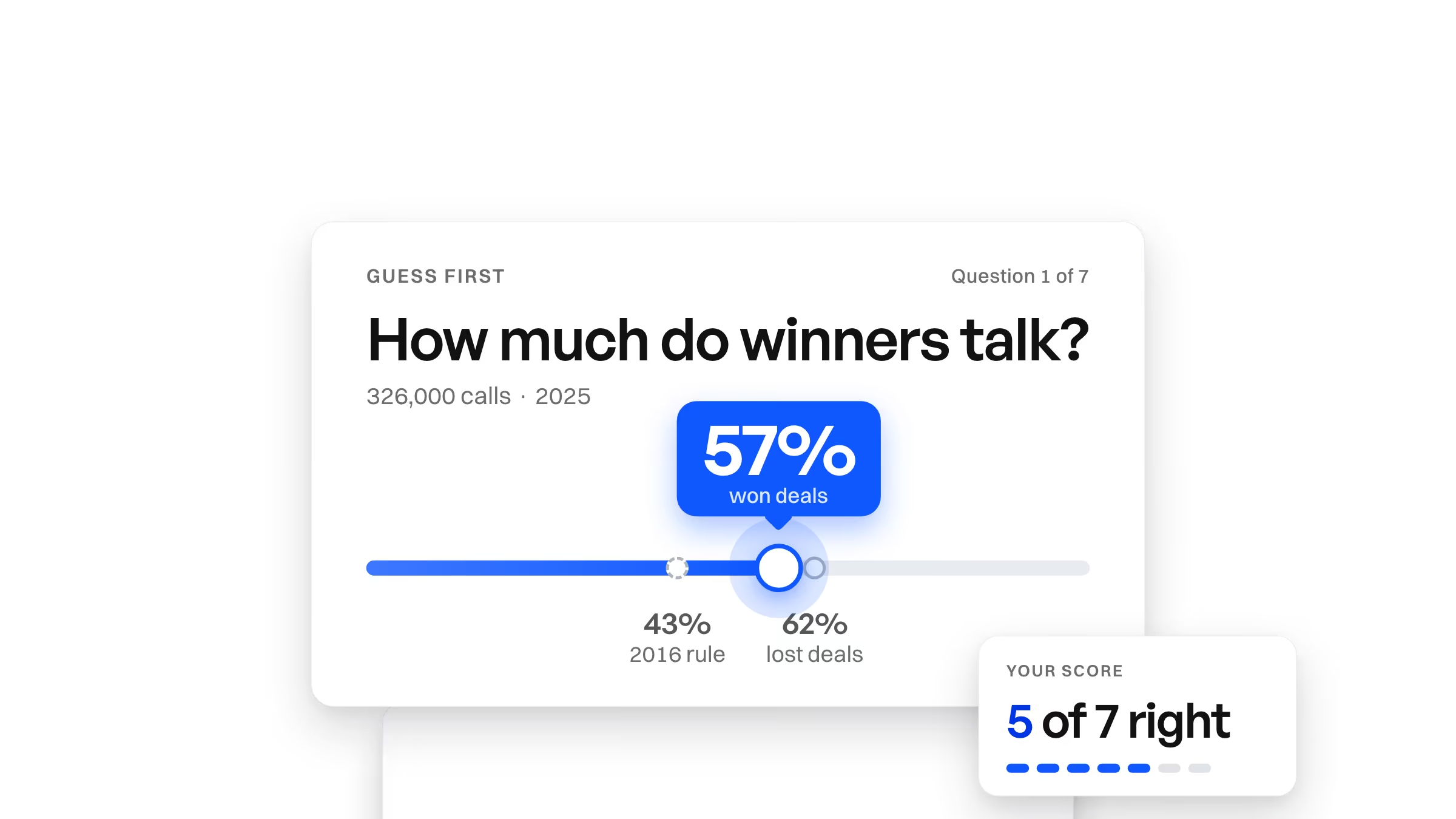
You have probably heard that the best sellers talk 43% of the time and listen for 57% (well they try at least). You may also have heard that a discovery call needs 11 to 14 questions. Both numbers are real and both come from Gong Labs studies published in 2016 and 2017, and Gong’s own newer data tells a different story.
So we went back to the source pages. Every figure below was read on the page it came from on 15 October 2026, and each one is linked. Seven rules, in order. Pick an answer before you read the reveal, and your score copies as text at the end.
Rule 1: talk 43% of the time, listen 57%
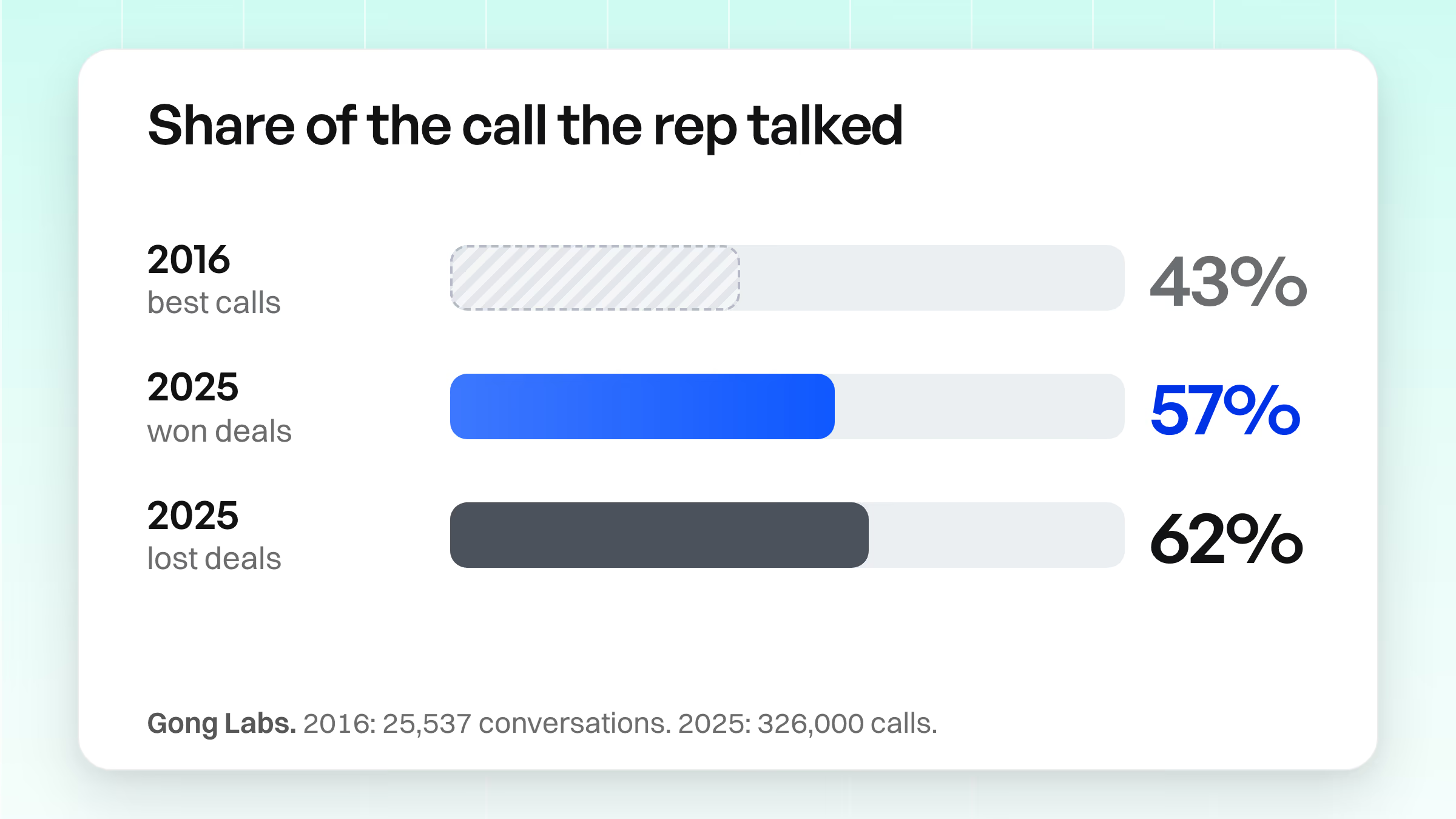
The best-known number in call coaching came from Gong’s first study. It looked at 25,537 B2B conversations from the first half of 2016, and the best calls had the rep talking 43% of the time. In 2025 Gong ran the question again on 326,000 calls of at least ten minutes.
Guess first
In the 2025 refresh, reps who won deals talked for what share of the call?
Pick an answer to see the real figure.
57%
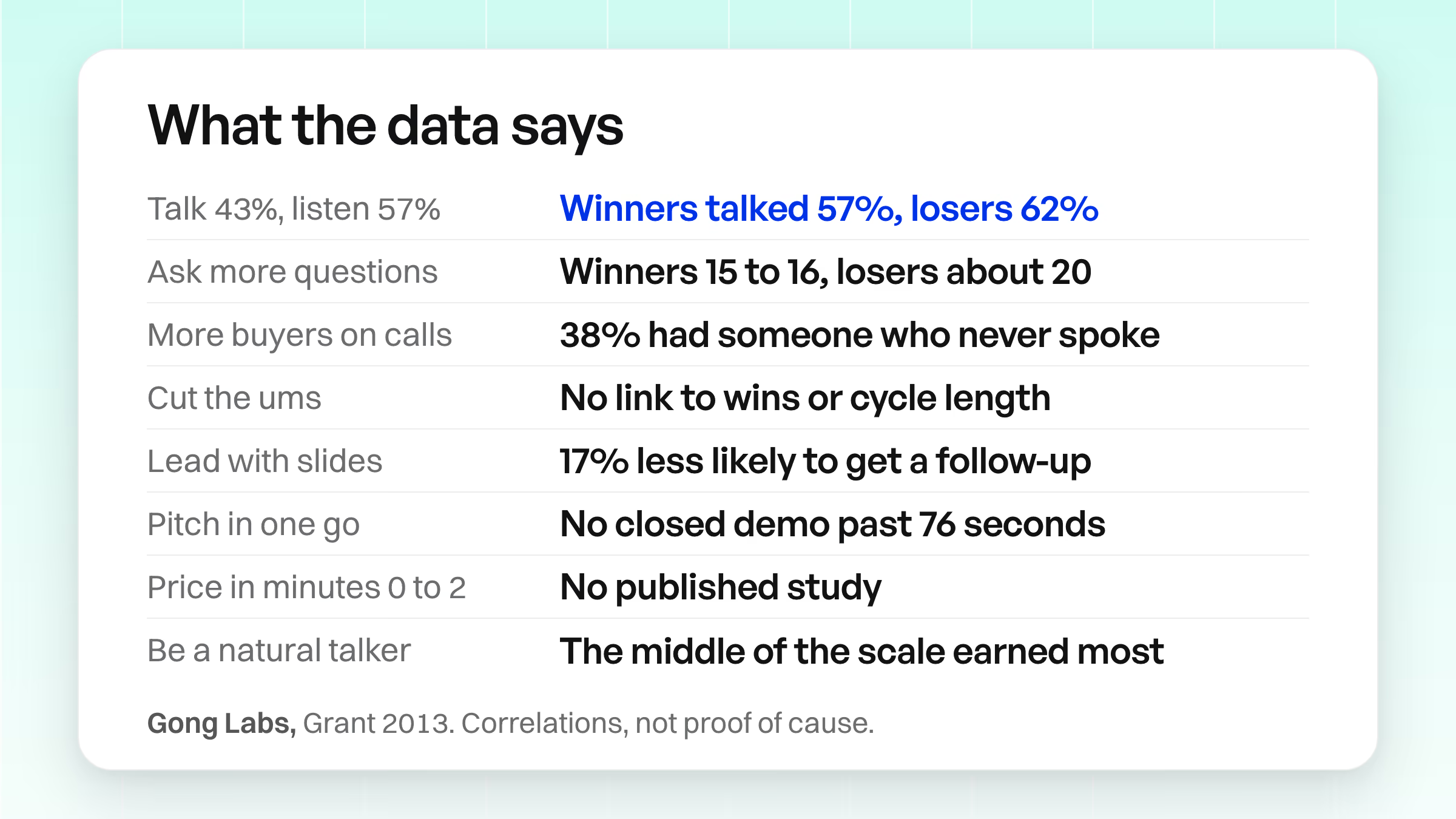
Reps who lost deals talked 62%, and across all calls reps talked 60% and listened 40%. So the 43% was a 2016 figure for the best calls, and today’s winners talk well above it. The gap between winners and losers is five points.
The sharper finding is about consistency. Strong reps kept about the same ratio in deals they won and deals they lost. Weaker reps talked 54% in wins and 64% in losses.
A ratio is a result, not a technique. The swing is the part worth watching on your own calls: what changes in the call you lose, and do you start talking more when the buyer pulls back?
Rule 2: ask more questions
Sellers are told to ask more. Gong’s 2017 study of more than 519,000 discovery calls found the best results at 11 to 14 targeted questions. Here is what the 2025 data shows.
Guess first
Winners asked 15 to 16 questions per call. About how many did sellers who lost ask?
Pick an answer to see the real figure.
About 20
Gong’s reading is that struggling sellers fire off questions without real dialogue. That is its interpretation, not something it tested, and the page does not say how a question was counted.
Three Gong datasets now give three different answers, and they do not cancel each other out. They measure different things.
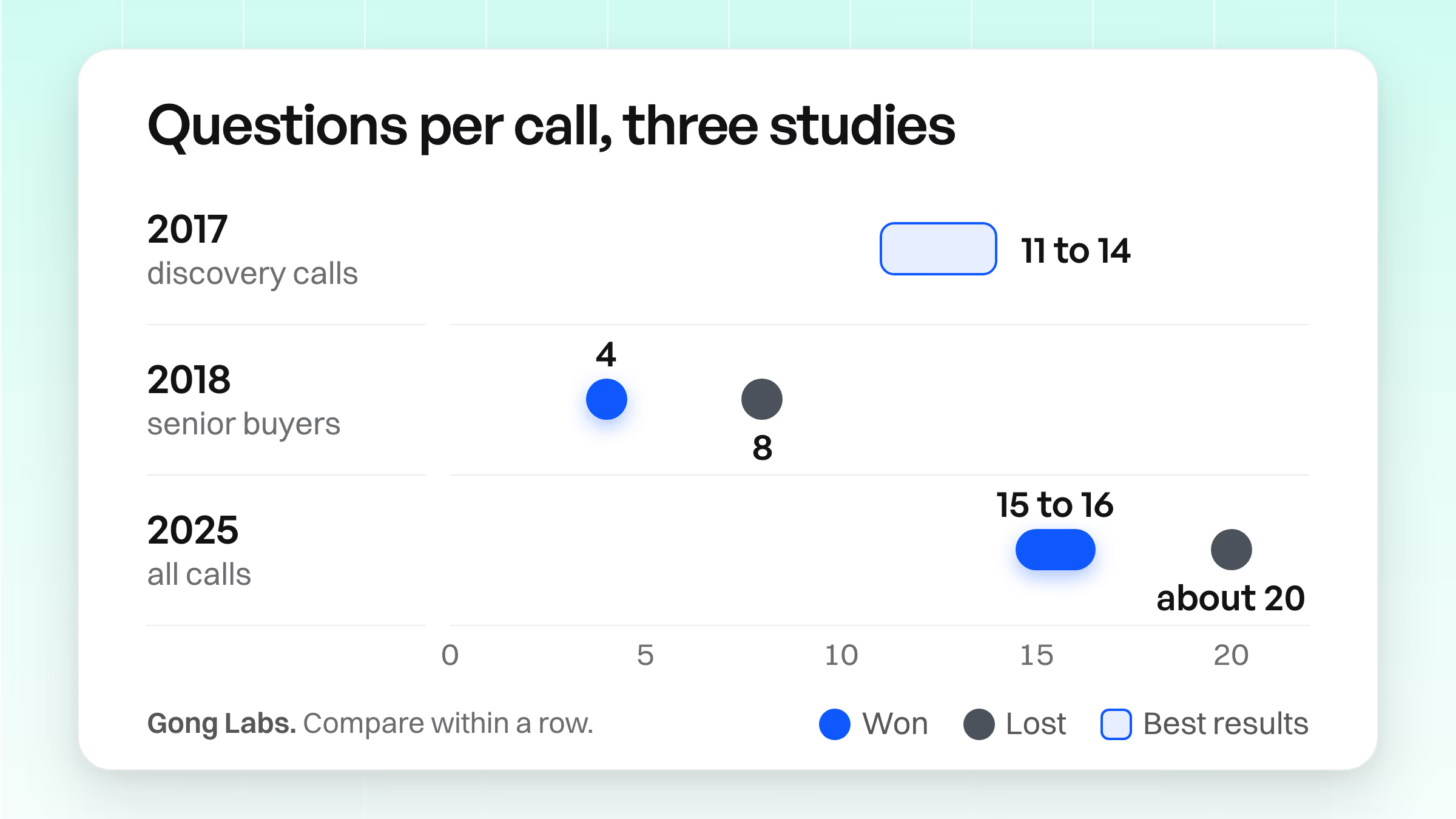
More than 519,000 discovery calls. Success peaked at 11 to 14 targeted questions and fell back to average beyond that. The page does not state the success rate for each bucket. (Gong, June 2017)
39,105 deals, only meetings where an SVP-level or higher buyer was present. Winning first meetings averaged 4 sales questions. Qualified meetings that did not progress averaged 8. Retellings often drop the seniority limit. (Gong, August 2018)
326,000 calls of ten minutes or more. Won deals 15 to 16 questions, lost deals about 20. (Gong, 2025)
There is one more piece, and it is not about selling. In a Harvard study published in 2017, people who were assigned to ask more questions in a conversation were better liked by the person they spoke to. Those were conversations between people who had just met, not buyers and sellers. It does not tell you that more questions win deals. Put the two side by side and the count looks like a symptom of how the conversation went, not a dial to turn.
Rule 3: get more buyers on the call
Getting more buyers onto a call is common advice. Gong’s newest study, published on 9 October 2026, asks a sharper question: of the buyers who join, how many ever speak? It covers more than 120 million calls.
Guess first
On calls with four to six buyers, what share had at least one person who never said a word?
Pick an answer to see the real figure.
38%
Across all calls with several buyers it is one third. Gong also reports that deals where one buyer ever spoke were won 56% of the time, and deals where four or more spoke were won 87% of the time.
The study does not give its date range or say how it defined a win.
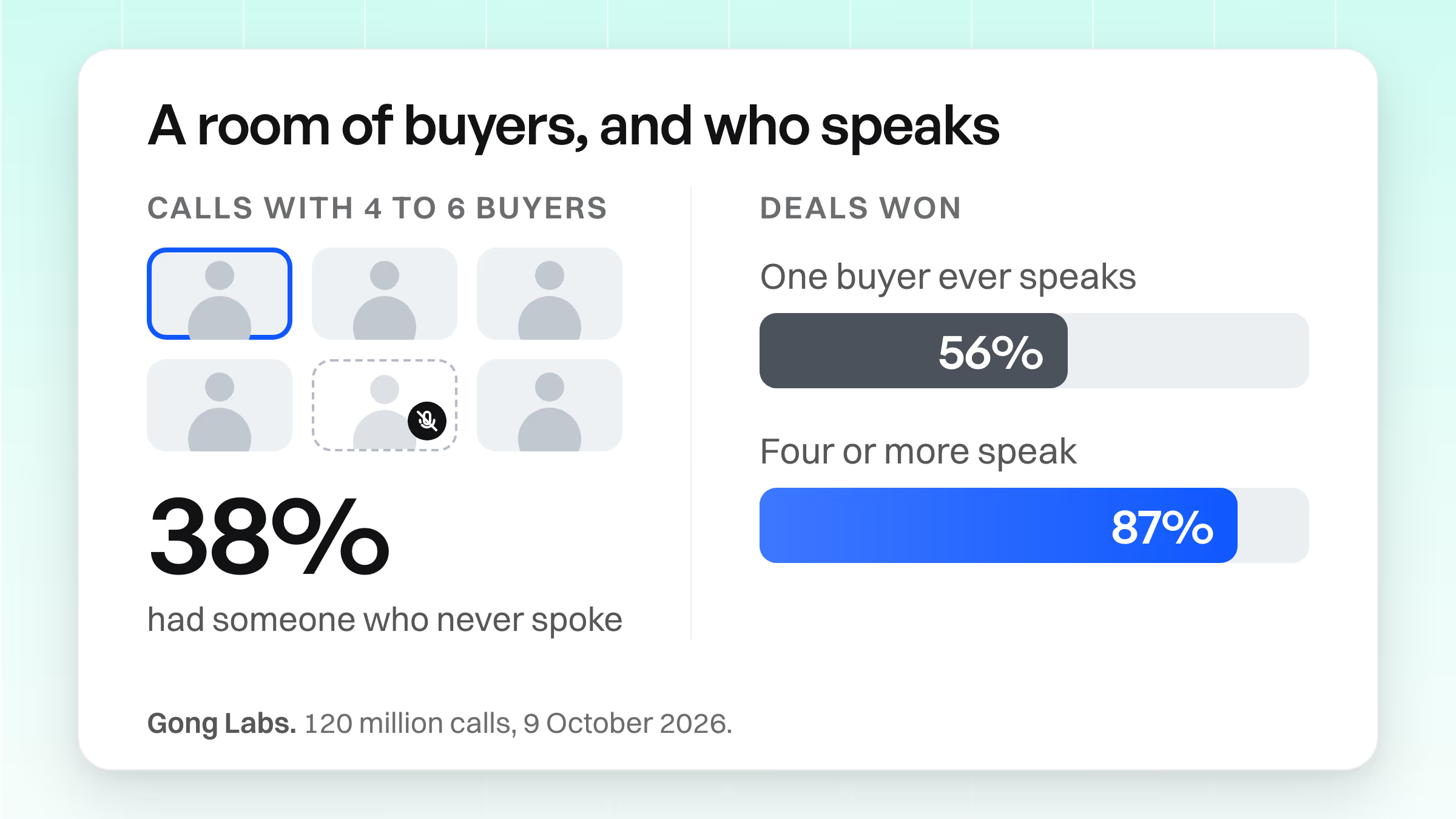
A deal with four buyers talking is probably a deal that was going well already, so do not read 87% as an instruction. It does change what you do with a quiet attendee. They are the one person on the call whose opinion you know nothing about.
Rule 4: cut the ums (the dreaded stutters)
Filler words are the first thing a coach marks on a recording. Gong looked at nearly half a million B2B calls in 2017.
Guess first
Gong checked win rate, sales cycle length and stage-to-stage conversion. How many of the three moved with filler words?
Pick an answer to see the real figure.
None of them
Top, middle and low performers used the same filler words at about the same rate, and Gong found no link to any of the three. It also reports that “so” made up a third of all the filler words it counted.
The page does not say how um and uh were handled in the transcripts, and the study is from 2017, so this is one dataset and not a verdict.
Take that as permission to stop scoring ums on call reviews. A seller who pauses to think is not costing the deal in this data.
Rule 5: lead with slides and make the case in one go
Two habits that feel professional do badly in Gong’s data. The studies are not recent, so each one carries its year.
Guess first
In 803,402 meetings, how much less likely was a follow-up call after a discovery meeting where the seller used slides?
Pick an answer to see the real figure.
17%
Sellers who used slides asked 21% fewer questions, and their average monologue ran 25% longer.
The measure is a booked follow-up call, not a closed deal. Gong also found that slides went with better results in mid and late-stage meetings, and it says slides themselves are unlikely to turn buyers off.
The second habit is the long pitch. Gong’s 2017 study of 67,149 demos looked at how long a seller talked without a break.
Guess first
Gong found no demo that led to a closed deal where the seller pitched without a break for longer than what?
Pick an answer to see the real figure.
76 seconds
Lost demos had uninterrupted pitches running up to 106 seconds. Winning demos also had 21% more speaker switches per minute.
Gong warns against reading too much into it. Its own example is that winning demos ran longer, which it puts down to more conversation and not to length.
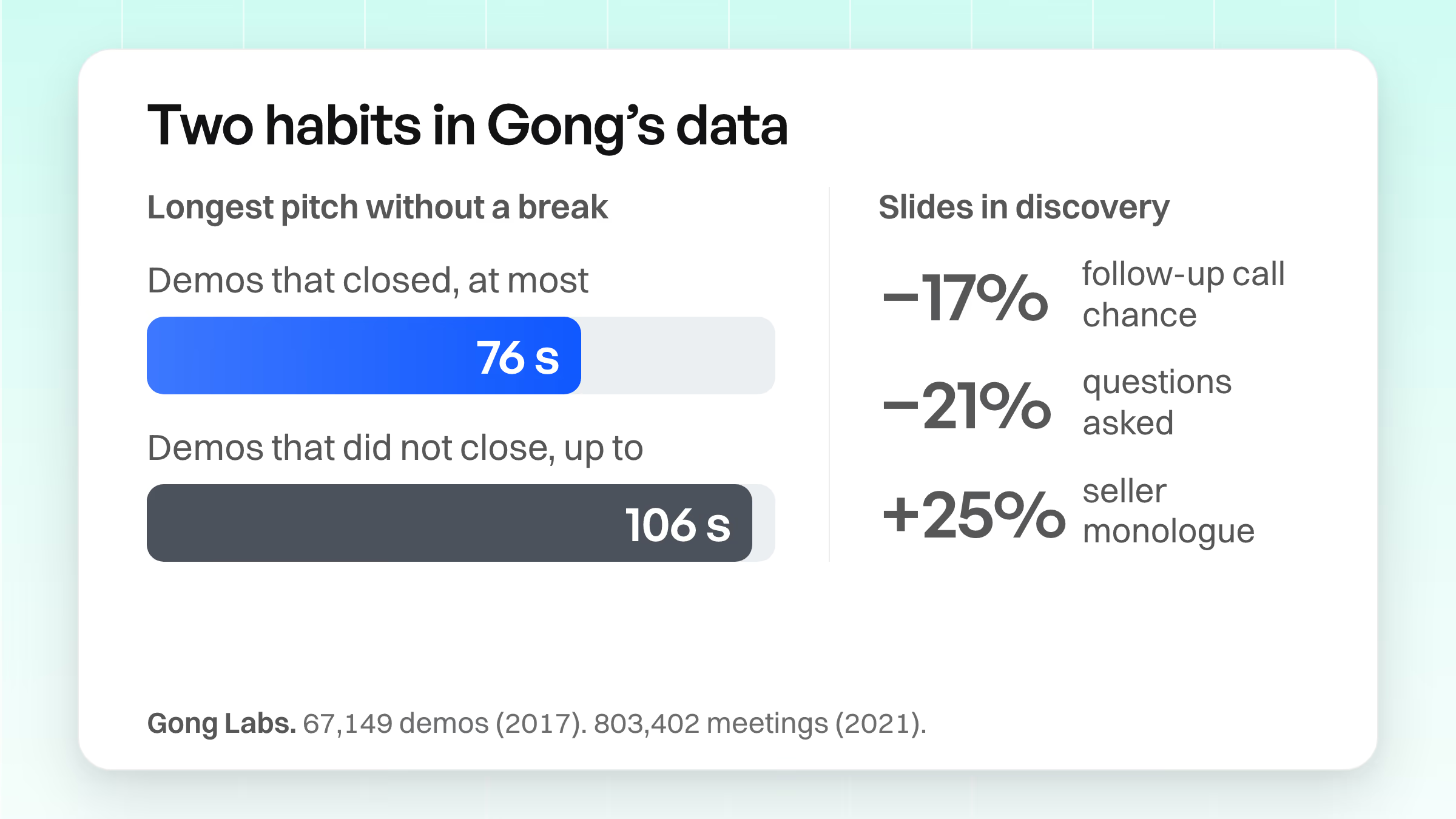
If you want one number to test on your own calls, take 76. Find the longest stretch where only you talked, and ask whether anyone could have joined in.
Rule 6: bring up price early (don’t be shy)
This is the rule where we went looking for a stat and did not find it. Here is the kind of line that travels, and we made this one up to show its shape: “Say the word pricing in the first two minutes and win rates rise 14%.” No such study exists in anything we read. If someone hands you a precise number for price talk in the opening minutes, ask where it came from.
What is published sits somewhere else, and it answers two different questions.
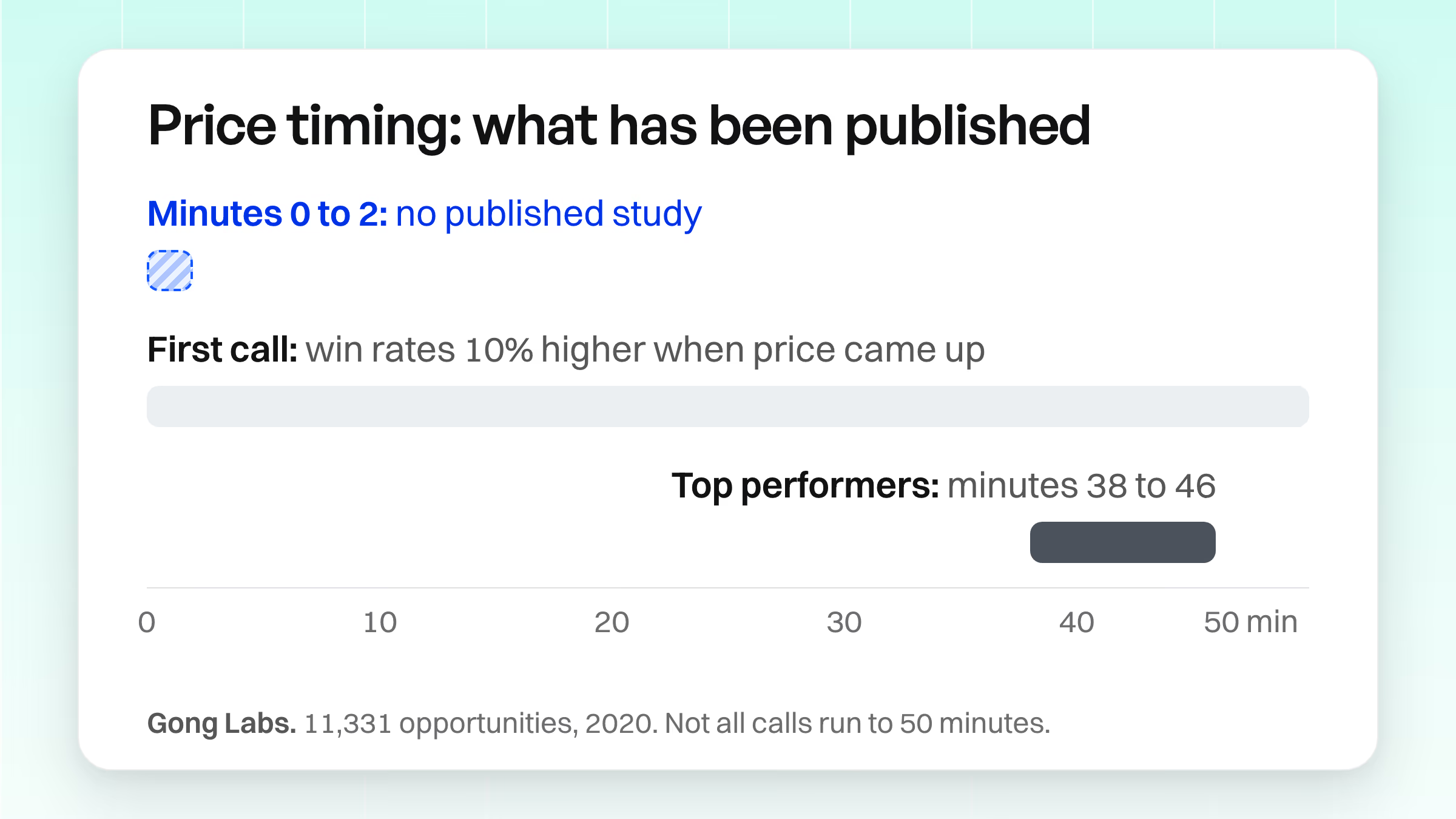
In a 2020 study of 11,331 opportunities, each with at least three calls, win rates were 10% higher when price came up on the first call. Gong does not say whether that is relative or in points, and it found the result held no matter who raised it. (Gong, July 2020)
The same page advises raising price about three quarters of the way into the first call, and cites a separate Gong report that top performers bring it up in the 38 to 46 minute window. That figure comes from calls that run long, so it says little about a 20-minute call. (Gong, July 2020)
The only 14% we met while reading was something else entirely. In a 2018 analysis of one million calls, the phrase “Does that make sense?” went with a 14% higher chance of a deal moving to the next stage, and with no change in closing. (Gong, January 2018)
Rule 7: be a natural talker
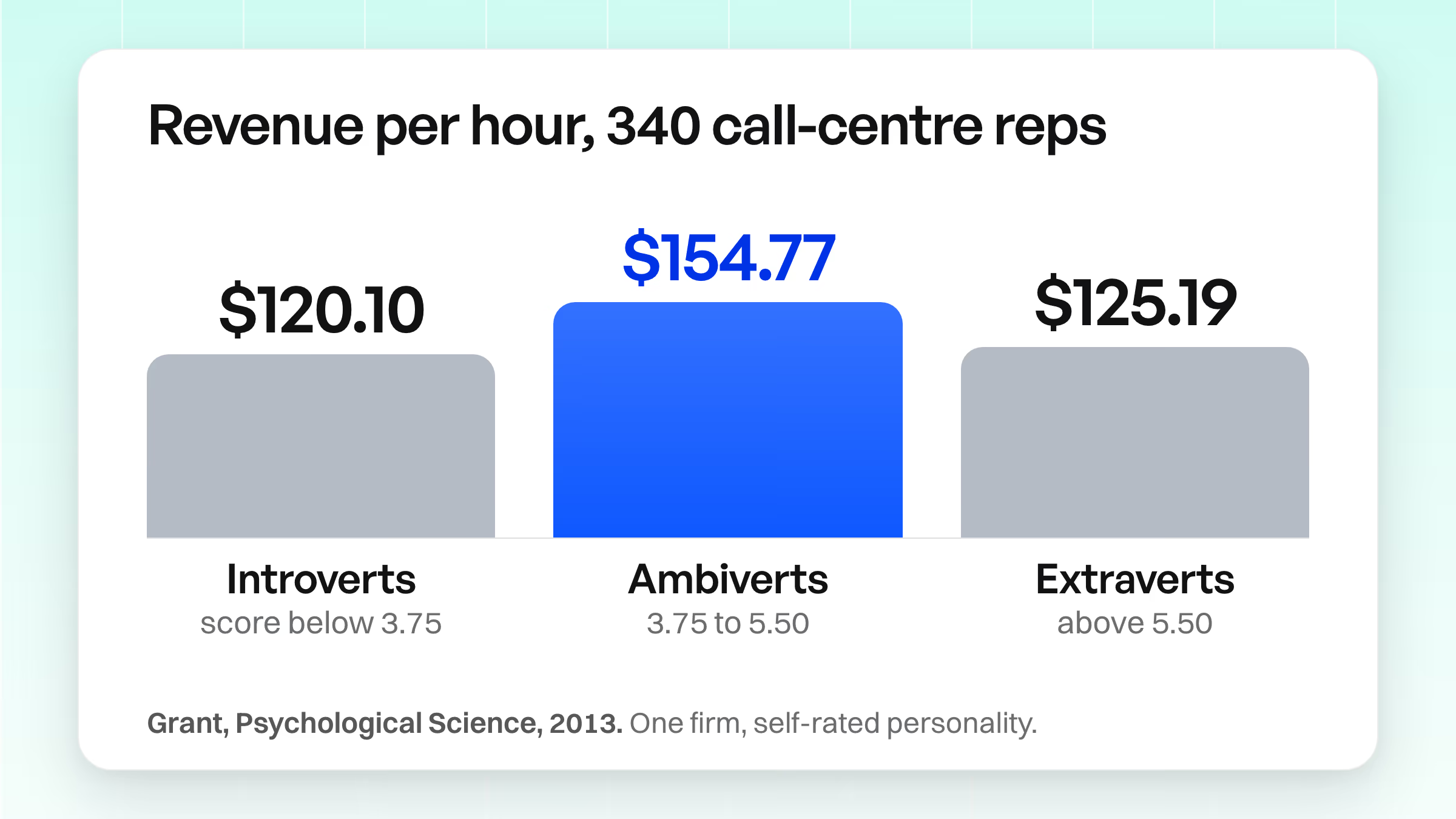
The last question is not from Gong. In a 2013 paper in Psychological Science, Wharton’s Adam Grant studied 340 reps at an outbound call centre and compared hourly sales by personality score.
Guess first
Who earned the most revenue per hour: introverts, extraverts, or reps in the middle of the scale?
Pick an answer to see the real figure.
The middle of the scale
Reps scoring between 3.75 and 5.50 averaged $154.77 an hour. Introverts averaged $120.10 and extraverts $125.19.
It is one firm, and the reps were young, with an average age of 19.9 and about six months in the job. Personality was self-rated. The paper suggests ambiverts balance talking and listening, but it did not measure either, so do not repeat that part as a result.
Your score
Answered 0 of 7
The odd ones, with the fine print
Three more findings get shared a lot, and each needs a caveat before you repeat it.
- Swearing. Gong reports that reps swear on 20% of their calls and are 4 times as likely to swear if the buyer does first. Close rates were 8% higher when both sides swore than when nobody did. The page gives no sample size and tells readers to be careful about cause. (Gong, January 2020)
- Your alma mater. Talking about your university went with 8% higher win rates across about 800,000 deals. Gong does not say whether the 8% is relative or in points. (Gong, December 2022)
- “I need to think about it.” The phrase did not lower win rates in 140,566 opportunities, and showed a slight rise. It stretched the sales cycle by 173%. Read that as “this does not kill deals”, not “this buyer is warm”. (Gong, May 2020)
What none of these numbers can do
Every figure above is an average of calls that already happened, measured by a tool that watched them afterwards. A 57% talk share is no help to you in the middle of a call. It cannot tell you what to say to the buyer who just spoke, and neither can 76 seconds.
That gap is where Axelize sits. It reads the live captions of your Google Meet call and writes your next sentence in your own voice. There is no bot, and no audio or video is recorded. It has not analysed any calls for this post. Zoom and Microsoft Teams are on the roadmap.
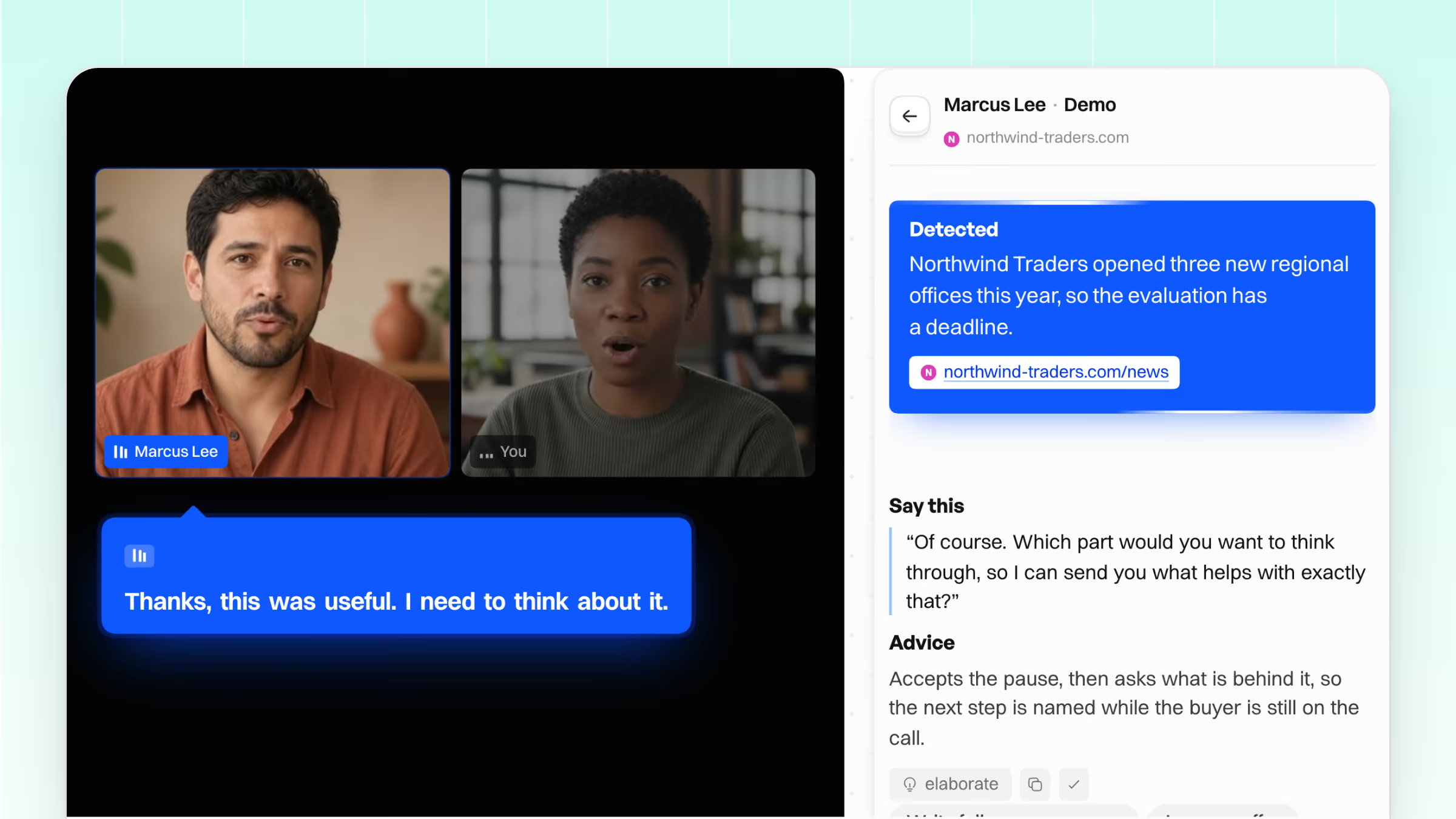
Until you have your own numbers, use these as questions to put to your last three calls.
Check your last three calls
- Open the transcript or recording of each of your last three calls
- Note your share of the talking on each, and compare the calls you won with the calls you lost
- Count how many people on the buyer side spoke, and name anyone who never did
- Find the longest stretch where only you talked, and see whether anyone could have joined
- Mark the questions that followed up on something the buyer said
- Note which minute price first came up, and who raised it
- Skip the ums