Reps miss objections? 7 types and how to catch them live
Buyers dress objections up as agreement, so reps miss them. The 7 types, the words that give each away, and which tools flag them while the call is live.
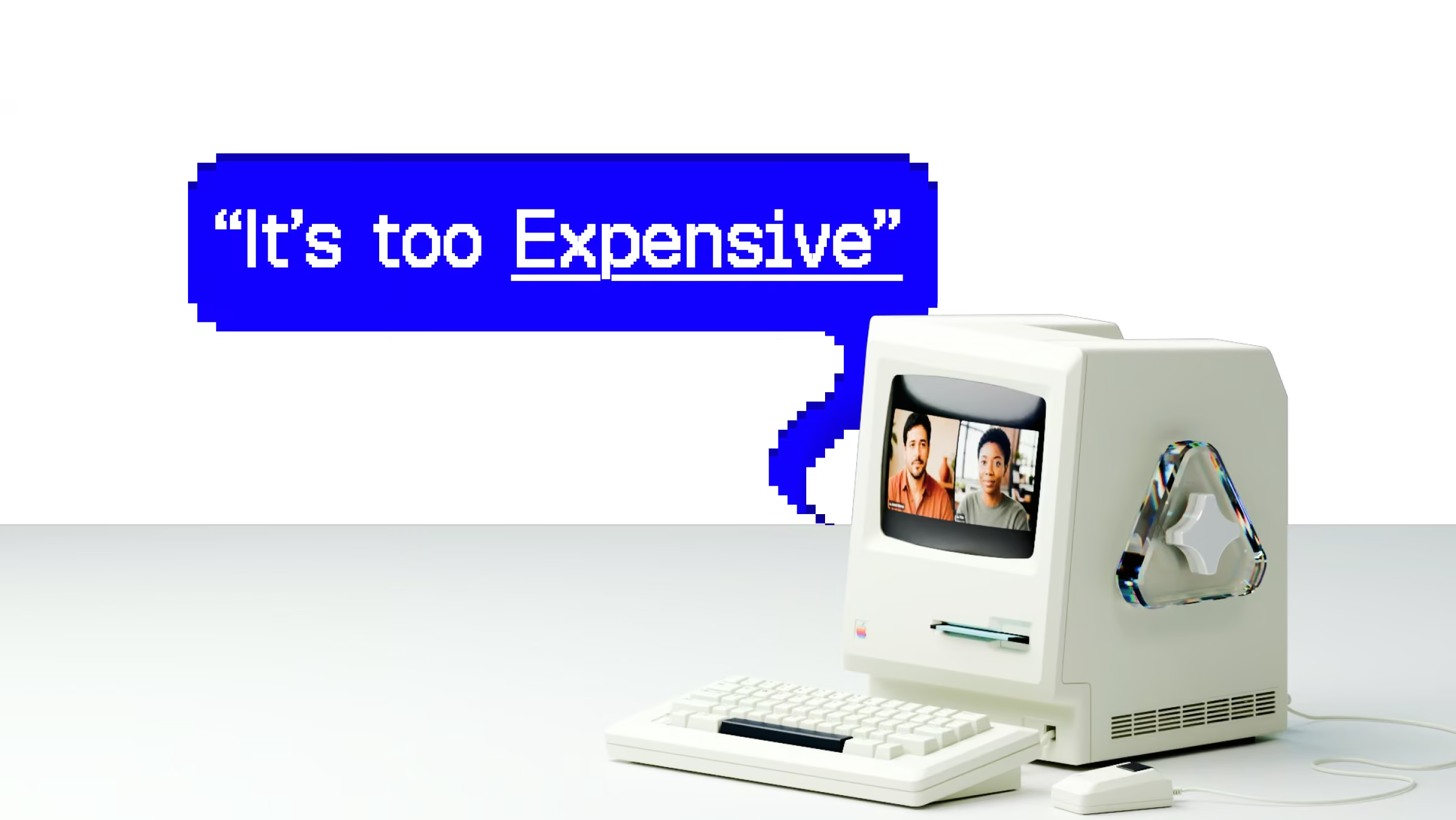
Yes, there are tools that flag objections by type in real time. Most of what gets sold as objection tracking flags them the next morning, though, and that’s too late for the call where it happened.
And the flag isn’t really the hard part. Reps hear “it’s too expensive” fine. What slips past them is the polite stuff. “Makes sense, send me something.” “Let’s pick this up in the new year.” That’s an objection too. It just sounds like agreement, so nobody answers it.
Can a call recorder flag objections in real time?
Mostly no. A recorder has to finish the call before it can read it. The tools that flag during the call are a different kind of product, and they’re built for different people.
| Tool | When it flags | What you get | Built for |
|---|---|---|---|
| Axelize (our pick) | During the call | The type, plus a reply written in your voice | Sellers on live calls |
| Gong | After the call is processed | A tag on the call and alerts in a saved stream | Managers reviewing calls |
| Symbl.ai | During the call | The objection’s category and the buyer’s words, sent to your own app | Developers building a tool |
| Balto | During the call | Suggestions on the agent’s screen | Contact centres |
That’s what each company’s own pages say, read on 25 October 2026. Gong’s help centre lists a Customer objection tracker that an admin can switch on with no training. It’s a manager’s tool. It pulls every objection from last month, after the deals they came from have already moved. Symbl.ai’s developer docs describe a live API that returns the objection type with the customer’s exact words. That’s a build, not a buy. Balto sells live help to contact centres, and a demo write-up says it picks up objections during the call. I haven’t tested any of the three, so read that as their description, not my review.
Why do reps miss objections that were said out loud?
Two reasons, and neither one is that the rep wasn’t listening.
The first is speed. In normal conversation people answer each other in about a tenth of a second. Stivers and colleagues timed it across ten languages. So when a buyer pushes back, you’ve got almost no room before a silence starts to feel strange. Most of us fill it by talking.
21.45 s
The second reason is manners. B2B buyers are nice. They don’t say “no, this isn’t worth it”. They say “interesting, can you send me the deck?” and then they don’t open it. If your ear only listens for the word “expensive”, you’ll miss the quiet ones. I think those do more damage, because nobody answers them.
What are the 7 types of sales objections?
Here’s how I sort them, with what the buyer says, what it tends to mean, and a first line to try. The lines are mine, not a study. Change the words so they sound like you.
| Type | What the buyer says | What it often means | A first line to try |
|---|---|---|---|
| Price | “That’s more than we budgeted.” | The number or the value isn’t clear yet | “Fair. Compared with what?” |
| Timing | “Let’s pick this up next quarter.” | Something else won the priority fight | “Sure. What has to happen before then for this to matter?” |
| Incumbent | “We already use something for that.” | Switching feels like work and risk | “Makes sense. Where does it let you down, if anywhere?” |
| Authority | “I’ll need to run it by my boss.” | They’re not the buyer, or they aren’t sold yet | “Of course. What will they ask you that I should answer now?” |
| Risk | “Security will never sign off on this.” | Fear of looking bad if it goes wrong | “Fair worry. What would a safe first step look like for you?” |
| Need | “Honestly, we’re fine as we are.” | No pain yet, or nobody has named it | “Good to hear. When did it last go sideways?” |
| Brush-off | “Sounds great, send me something.” | A polite exit | “Happy to. What should it answer, so it’s not just another deck?” |
See the pattern? Every line agrees first and then asks. That’s on purpose. The same Gong study found its top reps came back from an objection with a question, while the average rep went straight into that twenty-second answer. You don’t need to win the point. You need the buyer to keep talking.
Price is the type most reps want a ready answer for. A price objection handling script only works if it fits what the buyer actually said. “Too expensive” and “your rival is cheaper” need different replies. If you’d like one written around your own number, the free price objection handling script generator builds it in under a minute, no sign-up.
The brush-off deserves its own drill, because it’s the one that sounds like a win.
What would you say?
Buyer“Sounds interesting. Can you send me something to look at?”
Open a reply to see how it lands.
“Sure thing, I'll send the deck over right after this call.”
MissesYou agreed to the exit. The deal now lives in an inbox, and you still don't know what they doubt.
“Happy to. So it's not just another deck in your inbox, what's the one thing it would have to answer?”
LandsIt says yes to their request and turns it into a question. Whatever they name is the real objection, and you've got it while they're still on the call.
Axelize writes this kind of reply during your call.
“Of course! Before I do, can I quickly show you two more features?”
MissesThey showed you the door and you pitched harder. It feels pushy, and it skips the reason they wanted to leave.
How do you find the objections your team missed last week?
You don’t need a new tool for this part. Take five call transcripts from last week, from whatever recorder or notetaker you already have, and paste them one at a time into ChatGPT or Claude with this.
Find the objections nobody answered
Read this sales call transcript. List every objection the buyer raised, including polite ones like “send me something”, “makes sense, but” or “let’s revisit later”. For each one give:
- The buyer’s exact words.
- The type: price, timing, incumbent, authority, risk, need or brush-off.
- What the seller did next: answered it, asked about it, or moved on.
Then list the objections the seller moved on from. If a line is unclear, say so. Don’t guess.
Do five calls, not one. One call tells you about a bad day. Five tell you about a habit. If the same type keeps landing in the “moved on” pile, that’s your coaching topic for the month. My bet is it’ll be the brush-off or timing. Those two sound the most like good news.
What about objections nobody closed before a renewal?
Renewals are where the “moved on” pile comes back. A customer who said “we’ll revisit the reporting gap next quarter” eleven months ago will often say it again, now with a competitor’s quote in hand. Run the same prompt on that account’s calls from the past year, keep only the objections marked “moved on”, and read them before the renewal call. The full method, with a prompt built for renewals and a list of which platforms read call transcripts for risk, is in how to find unresolved objections before a renewal call.
What should you check before you trust a live flag?
A demo will always look perfect, so judge a tool on your own calls. This is the test I’d run.
Test a live objection tool on real calls
- Run it on five real calls, not the vendor’s demo
- Write down every objection you heard, then compare with what it flagged
- Check that it catches the polite ones, not only “too expensive”
- Time how long the flag takes after the buyer stops talking
- See whether it hands you a line to say or only a label
- Ask what it stores: audio, video, a transcript or nothing
- Make sure it runs on the meeting platform your buyers use
If it only labels, you’ve still got to come up with the sentence yourself, in the same tenth of a second. A label tells you what just happened. A reply helps you with what happens next.
Where does Axelize fit?
Axelize flags the objection and writes your reply while the buyer is still talking. It reads the call's live captions and classifies what the buyer said as price, timing, incumbent, authority or risk. Then it pulls what it knows about the account and puts a line on screen in under two seconds, in your own words, ready to say.No bot joins and no audio or video is kept. The caption text of every meeting stays on the account, next to its notes and files, so the next call with that buyer starts from what they said last time. Run the prompt above on those transcripts whenever you want the team view. It works with Google Meet. Zoom and Microsoft Teams are on the roadmap. The trial runs 14 days with no card, and Solo is $29 a month after that.