AI cold calling: what works, and what burns your list
We've been cold-called by AI and tried the agents ourselves. What AI cold calling costs a minute, what the FCC says, and which calls a human still wins.
We’ve picked up AI cold calls. You can tell within a couple of lines. There’s a little pause after everything you say, every single time. Talk over it and it gets lost. And it’s too smooth: no ums, no change of pace, the same bright energy on every sentence, like an ad reading itself to you.
We’ve also tried the agents from the other side, on Vapi, Retell, Bland, ElevenLabs and Synthflow. Where we ended up is pretty boring. If a lead asked you to call, let an AI ring them back in seconds and book the slot, then pass the call to a person. Just don’t point it at a cold list. A cold buyer gives you a few seconds to earn the next minute, and that little pause alone eats them.
What is AI cold calling, exactly?
People use the phrase for three products that barely overlap. Ask who’s actually talking to the buyer, and they sort themselves out.
| What it does | Who talks to the buyer | Examples | Use it for |
|---|---|---|---|
| Writes your rep’s next sentence while the buyer talks (our pick) | Your rep | Axelize | Calls where a person should do the talking |
| Places and holds the call on its own | The AI | Bland AI, Retell AI, Vapi, Synthflow | Inbound, reminders, booking |
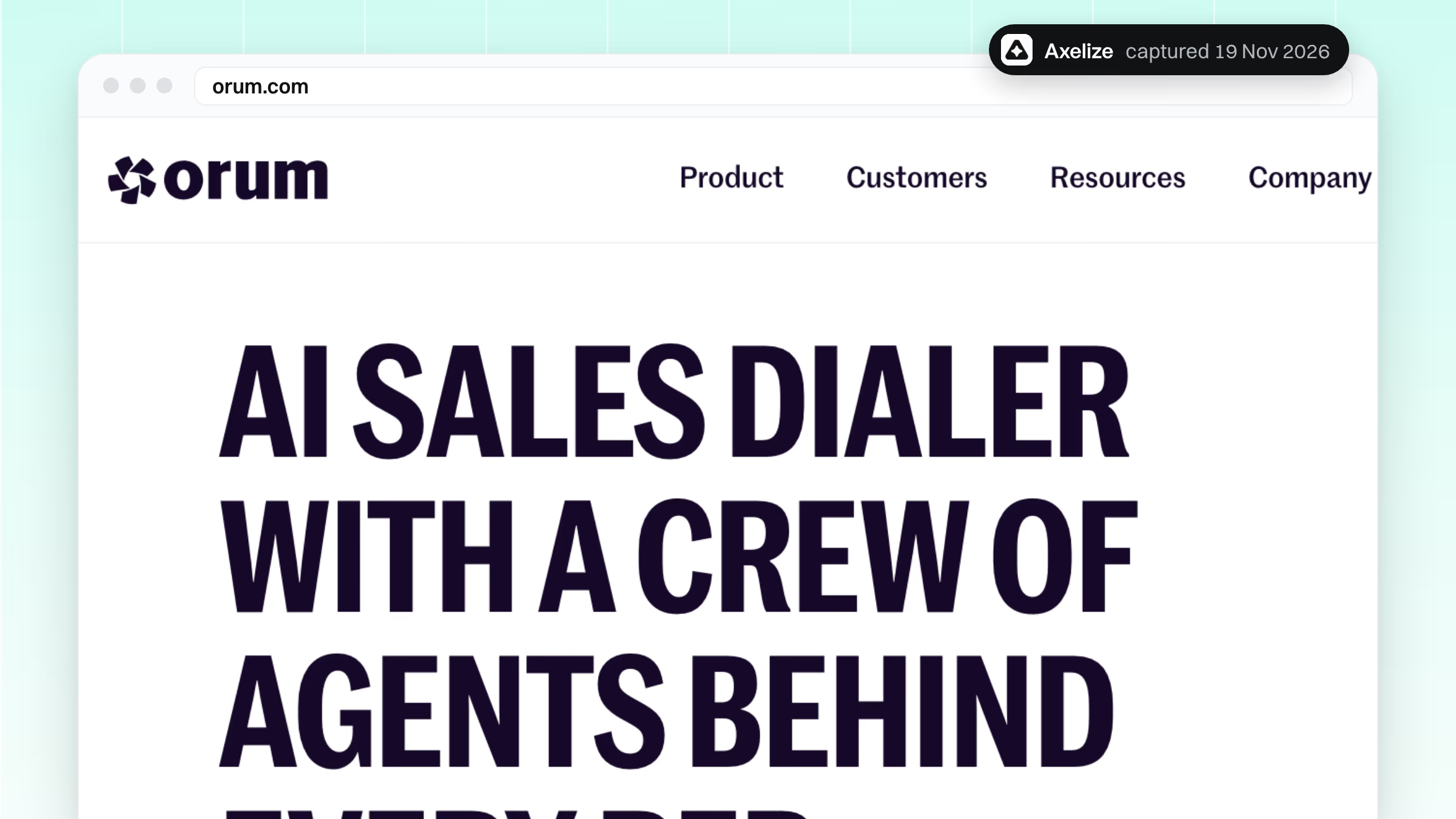
| Dials for your rep and connects whoever picks up | Your rep | Orum, Nooks | High-volume outbound |
Most “AI cold calling” pages are selling the second row. It’s the one that gets demoed, because a robot booking a meeting makes a great video. It’s also the one we’d keep away from your cold list.
What gives an AI caller away?
The three tells we heard aren’t random. Each comes from how these agents are built.
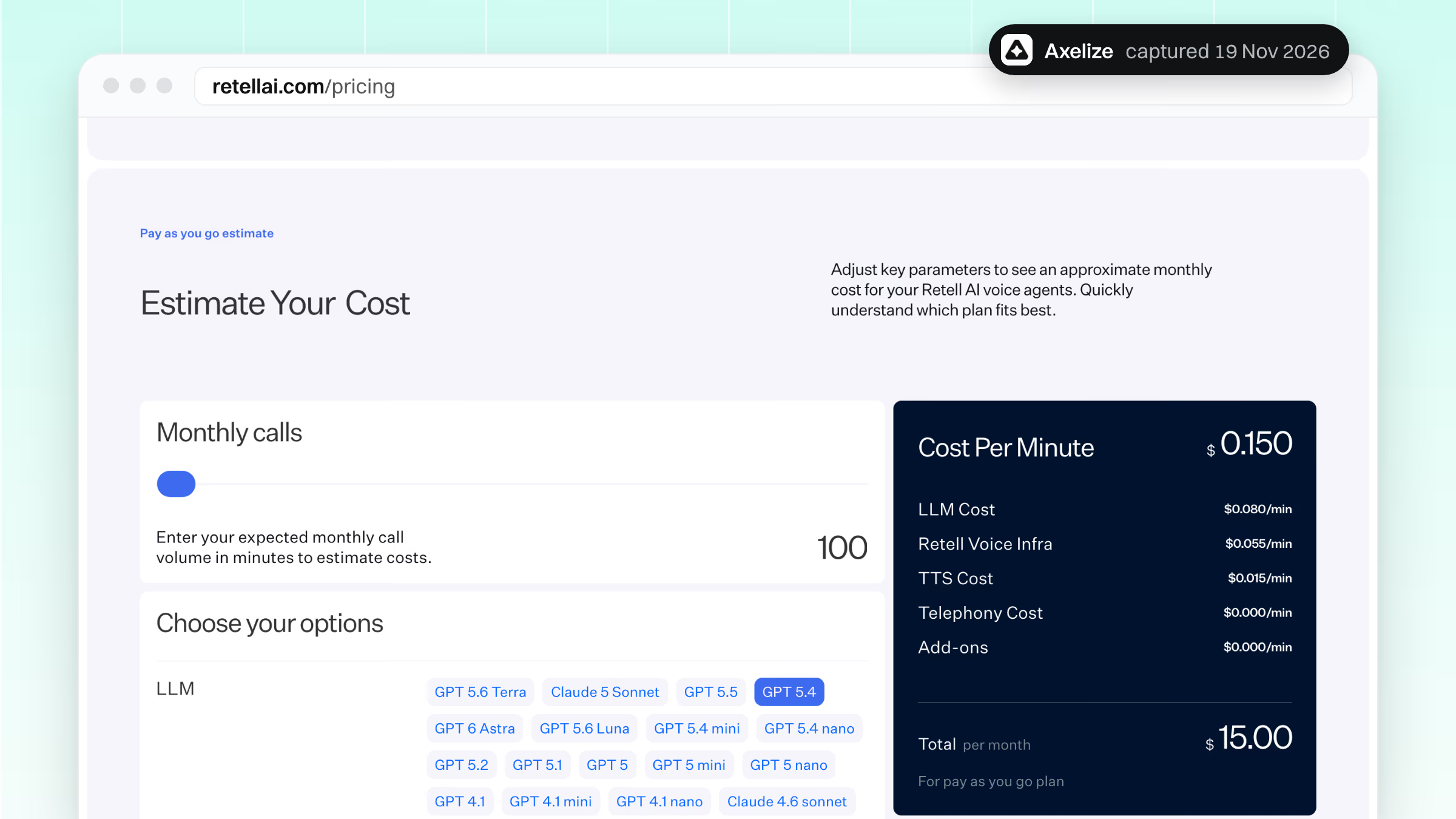
A voice agent is a chain. Your words become text, a language model writes the answer, a voice model reads it out, and the phone line carries it back. Retell’s own price calculator splits the bill along the same links.
Every link takes a moment. You hear the sum of those moments as the pause. It’s short. But a person answers you while you’re still finishing, and the gap is exactly what your ear catches.
The interruption problem comes from the same chain. When you talk over a person, they stop. An agent has to notice you’re talking, drop the sentence it already wrote and start again from your words. When we cut in on the one that called us, it lost the thread.
And the smoothness? Perfect sentences sound like a script because they are one. Real people trail off, restart, say “honestly” twice. Buyers who’ve had a few of these calls now listen for the polish.
What does AI cold calling cost?
Less per minute than you’d guess. These are the prices on each vendor’s own page on 19 November 2026.
| Platform | Price on its own page |
|---|---|
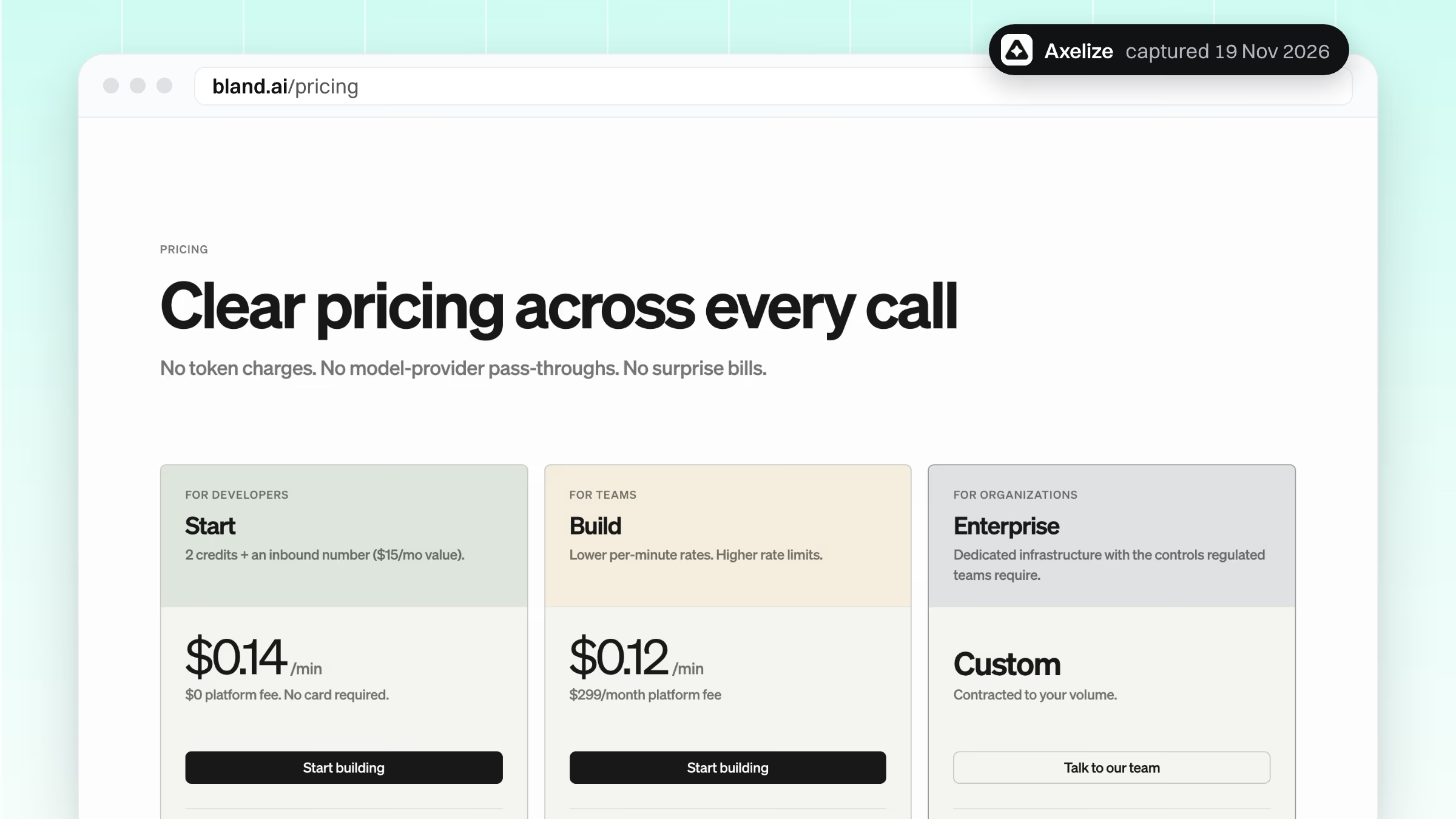
| Bland AI | $0.14 a minute on Start, no platform fee. $0.12 a minute on Build, plus $299 a month |
| Retell AI | Pay as you go. Its calculator showed $0.150 a minute with GPT 5.4 |
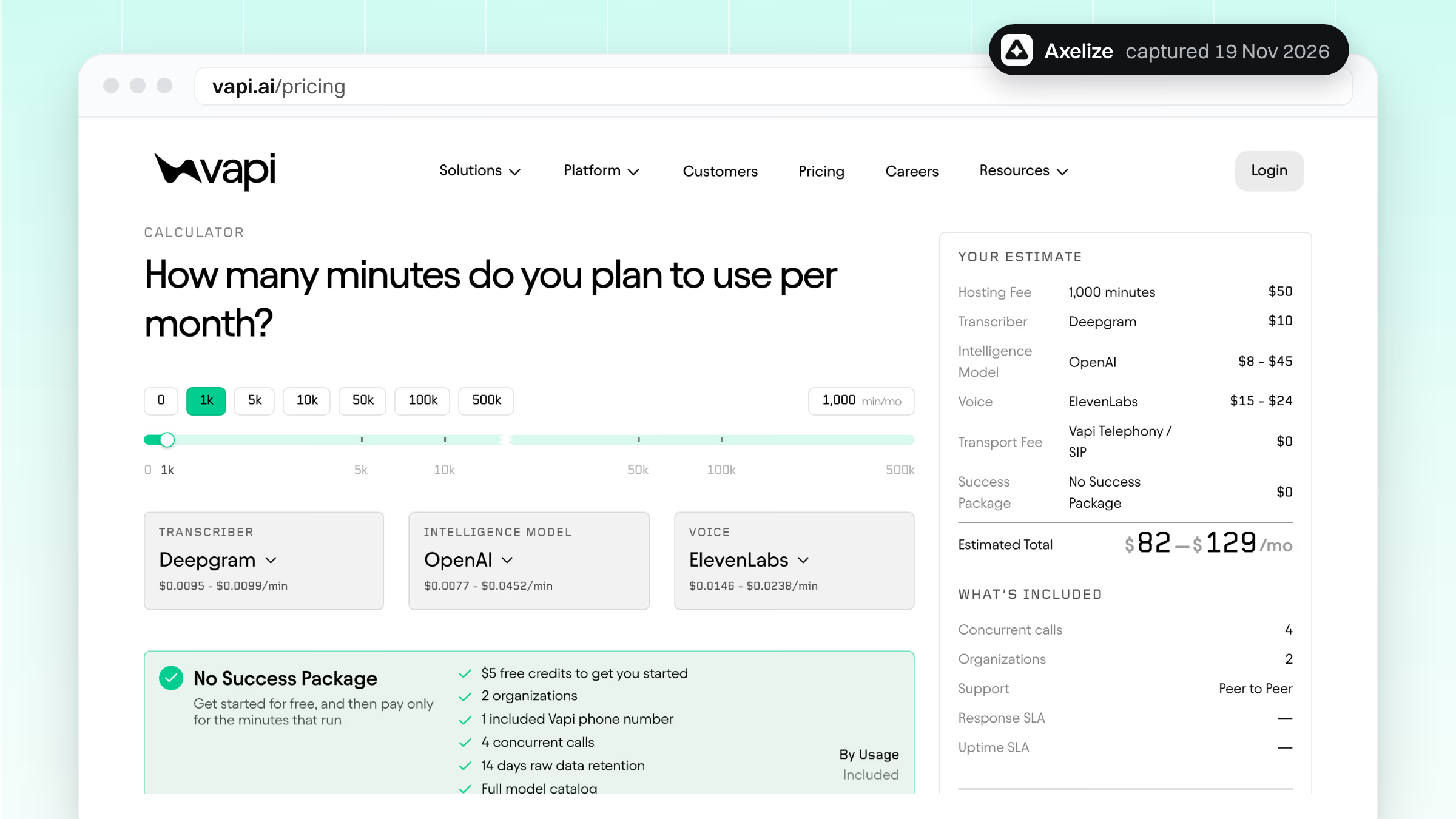
| Vapi | Its calculator estimated $82 to $129 a month for 1,000 minutes |
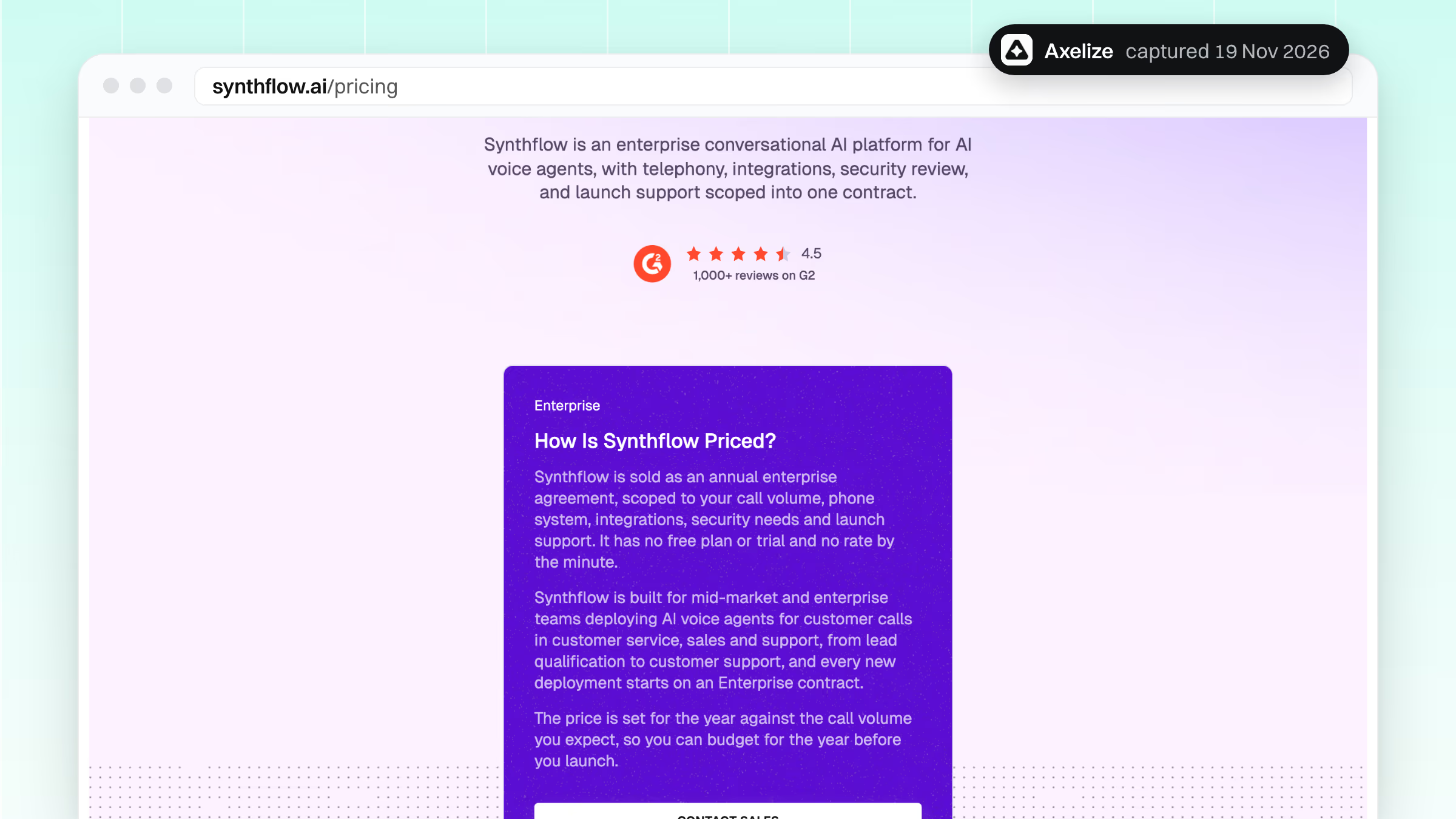
| Synthflow | An annual enterprise agreement. No free plan, no trial, no rate by the minute |
So call it ten to fifteen cents a minute on the self-serve ones. That’s cheap. The real price is the list. Every number an AI burns is a buyer who has now heard from you once, and badly. You don’t get that first impression back for a dime.
Is AI cold calling legal?
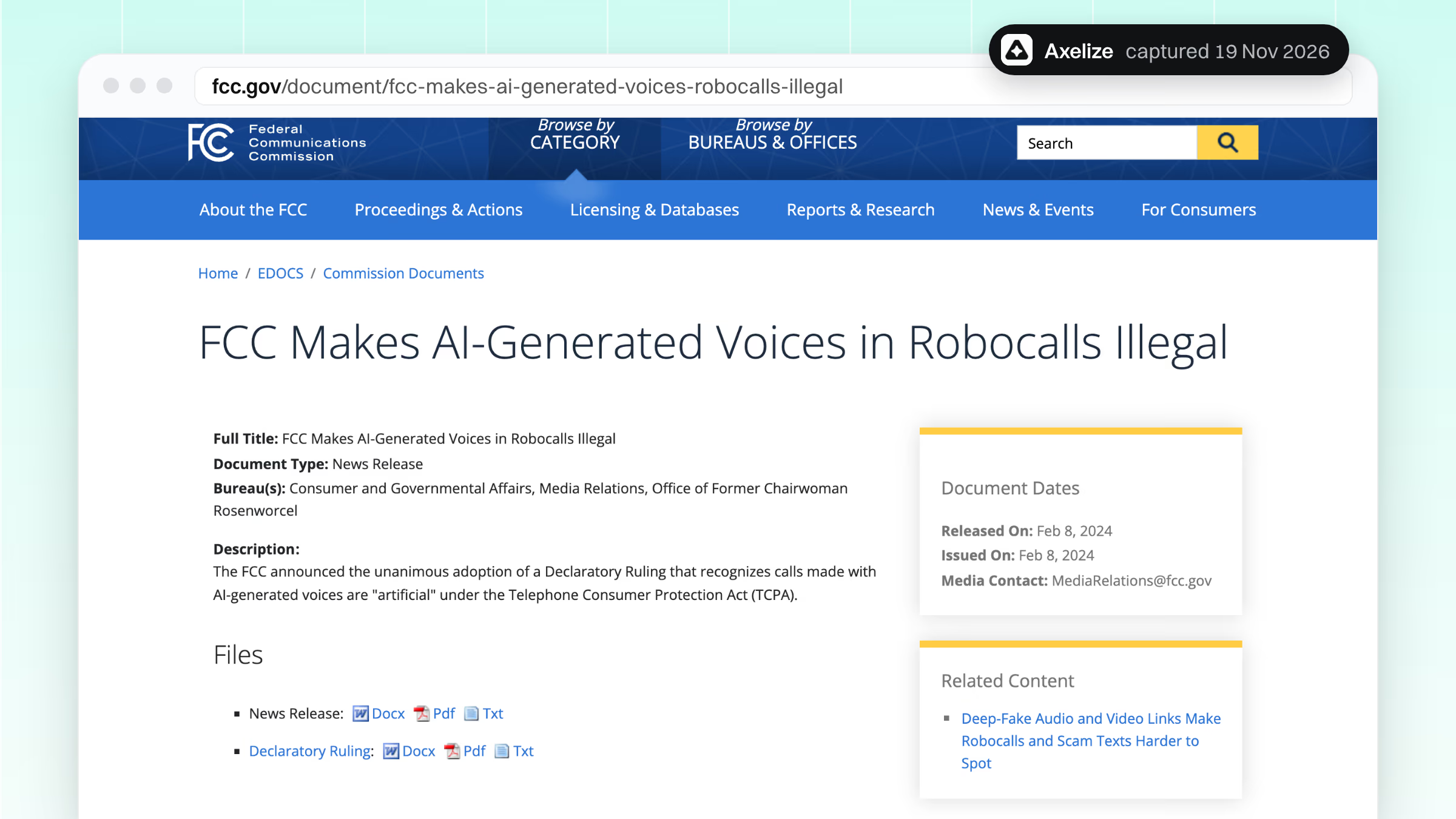
In the US, the question was settled on 8 February 2024. The FCC unanimously adopted a declaratory ruling that calls made with AI-generated voices are “artificial” under the Telephone Consumer Protection Act.
What that means in practice: an AI voice needs the person’s prior express consent, and prior written consent when the call is telemarketing. That covers mobiles, business or personal, and home lines. The FCC also proposed in August 2024 that AI callers say so at the start. It never adopted that rule.
Europe is stricter about the disclosure. Since 2 August 2026, Article 50 of the EU AI Act says people must be told they’re dealing with an AI, at the first interaction at the latest. In the UK, PECR regulation 19 asks for consent before an automated call to anyone, businesses included. A person dialing by hand only has to respect objections and the preference register.
Put plainly, a cold list and an AI voice don’t mix in the US or the UK. A lead who asked you to call is a different story.
Where AI calling actually works: inbound
We’d put AI on the phone only where the buyer called you first.
Speed matters more than polish there. The study everyone quotes on this, run by InsideSales.com with MIT’s James Oldroyd in 2007, found the odds of reaching a web lead dropped a hundred times when the call came at 30 minutes instead of 5.
Someone fills in a form at 9pm. Nobody’s at a desk. An agent can ring them back in seconds, ask the three questions your team always asks, book a slot and transfer the call to a person when it gets real. The buyer asked to hear from you, so the pause and the polish matter much less. Bland even prices the hand-off: transfer minutes have their own line on its pricing page.
That’s also the answer to a search that keeps bringing people to our site: “an AI sales assistant that books, transfers and closes”. Books, yes. Transfers, yes. Closes? That’s still a person.
The three brush-offs, and why a person still wins them
We hear the same three on cold calls, over and over: “Not interested.” “Send me an email.” “We already use something.” An agent answers the words. A person answers the reason behind them.
“Not interested.” It’s a reflex, not a decision. Agree with it, then ask one question that’s easier to answer than to hang up on: “Totally fair. One question before I let you go: are the new reps ramping on your current playbook or a new one?”
“Send me an email.” An agent sends the email and the call is over. That’s the polite way out, and the email gets deleted. Say yes, then make the email about them, so there’s a reason to reply.
On a cold call call, Alex Wilber from Fabrikam says: “Look, just send me an email.” Axelize finds: Fabrikam posted three SDR openings last week, all asking for outbound calling experience. It suggests: “Happy to. So it's worth opening: should it be about getting those three new SDRs ramped, or about the calls your team already makes?” Agrees to the email, then ties it to something they did last week, so the next step is a reply and not a delete.

“We already use something.” Good. They know the category, so you don’t have to sell it. Ask what they’d change about it, and listen.
None of these lines is clever. The hard part is finding them in the two seconds after the buyer stops talking. Axelize writes that sentence while the buyer is still talking, in your own voice, from what it already knows about the account.
The middle ground: an AI dialer
If volume is the reason you looked at AI calling, look at AI dialers first. They do the boring part, dialing and waiting through voicemails, and put your rep on the line when a person picks up. The voice is still human.
What we’d do this week
AI calling without burning your list
- Put an AI agent on inbound: answer fast, qualify, book, transfer to a person
- Get consent before any AI voice calls a number in the US
- Keep people on cold outbound, with a dialer if volume is the problem
- Write down your answer to the three brush-offs before Monday
- Give your reps live help on the call itself